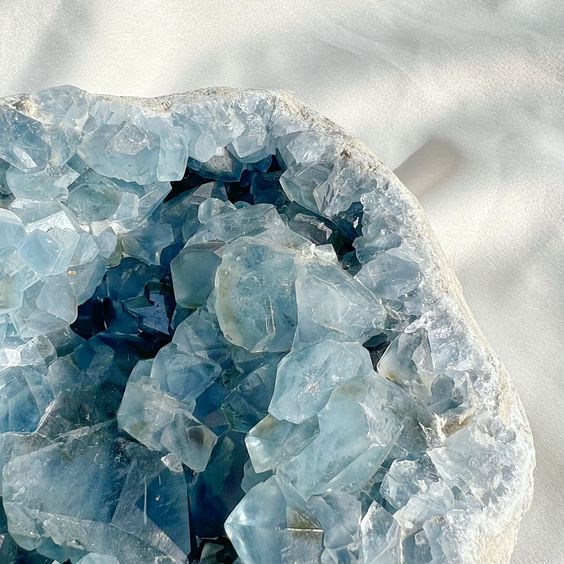
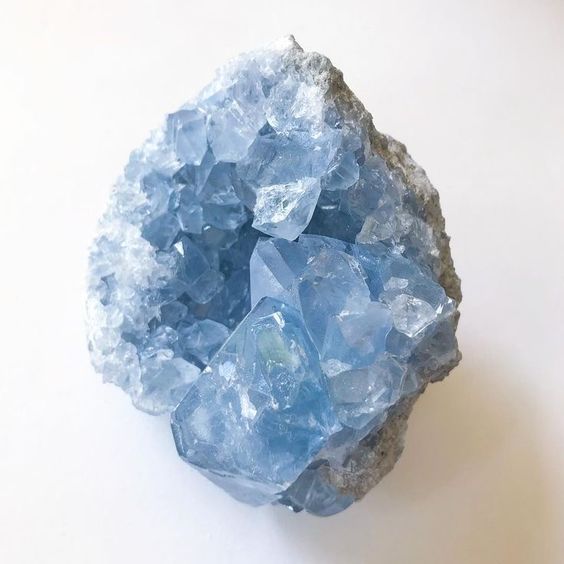
Celestine is a naturally occurring strontium sulfate. The name of this mineral stems from the Latin word “caelestis,” meaning “heavenly,” aptly reflecting its beautiful blue coloration. Among the varieties of celestine, one can find crystals with gray-blue hues, encompassing a broad spectrum of yellow and red shades.
Celestine, a stone with a glassy sheen, is notably fragile, featuring an irregular fracture and a susceptibility to impurities. It dissolves in water and loses its color, becoming pale and colorless under direct sunlight.
The first samples of celestine were mined in the 18th century in Sicily, initially leading to the mineral being named “sicilianite.” However, due to the geographical awkwardness of this name, German scientist A. Werner later renamed the stone to “celestine.”
The Magical Properties of Celestine
Celestine’s positive and amiable nature beneficially impacts the moods of those around it, making its energy particularly useful in meditative practices. It empowers men to feel confident in their abilities, while women may discover an enhanced sense of charm and allure.
Celestine is the stone of talented individuals. It awakens hidden capabilities and potential, lending eloquence and alleviating the fear of public speaking. To fully harness these qualities, daily interaction with the stone is recommended.
The magic of celestine manifests in amulets and talismans. A celestine amulet can help a woman navigate personal upheavals, such as a breakup, providing strength to endure challenging times.
For anxious and emotional individuals, wearing a celestine talisman can be instrumental in learning to maintain composure in stressful situations and think clearly when quick, sound decisions are necessary.

Healing Properties of Celestine
Celestine is attributed with healing properties common to all natural blue stones. Despite being less studied by lithotherapists, celestine is believed to possess remarkable healing qualities. It is known for normalizing blood pressure in both hypotension and hypertension cases, improving blood circulation, and restoring the permeability of blood vessels. It also eases the discomfort associated with rheumatic pains.
The use of celestine is effective in treating eye diseases, with its properties being beneficial for vision restoration.
However, the nootropic effect of the mineral requires careful use. The rhythms of the stone alternate between heightened mental activity and phases of inhibition, emotional downturn, and sleep. To experience the positive influence and power of the stone, one must align its rhythms with their daily cycle. Otherwise, celestine owners may face sleep disturbances, fears, and depressive obsessive thoughts, potentially leading to mental disorders.
The radioactive emission of the stone is utilized in treating malignant tumors and skin diseases. In combination with calcium and phosphorus, celestine is used in treating osteoporosis. Sometimes, this combination is enhanced with hormonal drugs for a more significant effect.
Caring for Celestine
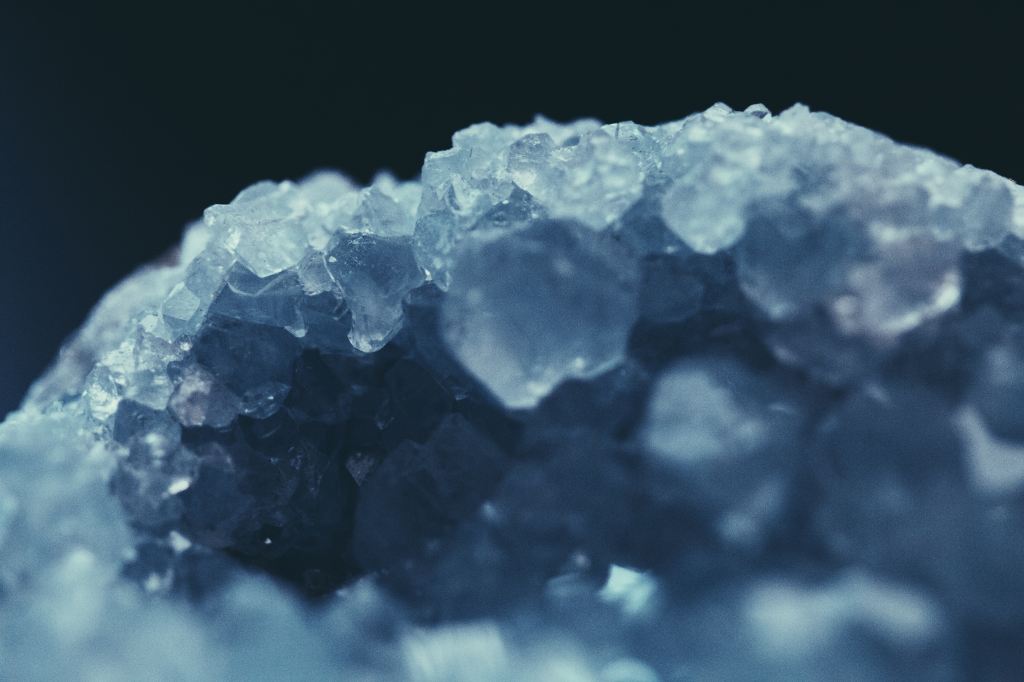
Celestine is a fragile mineral and is sensitive to adverse factors. Storing and caring for this gemstone requires particular delicacy:
- Avoid exposing the stone to sunlight, as it can lose its natural hue and luster.
- Prevent the mineral from coming into contact with water; it becomes even more brittle and may crumble.
- Protect the stone from impacts, sharp objects, and falls.
- Clean the stone with a dry, soft cloth.
Like all natural minerals, celestine is best stored in a separate box or case, ideally wrapped in a velvety fabric for extra protection.




 tea party on the moon
Leave a comment