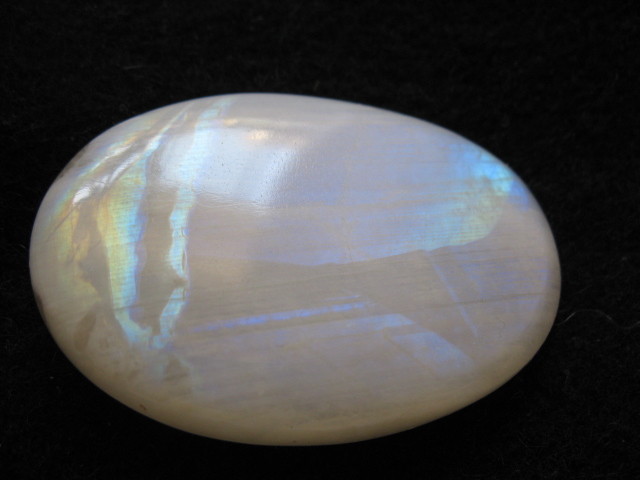
The Enigmatic Legends and Powers of the Moonstone
The moonstone, with its poetic name, captivates us just as much as its external appearance does. Its elusive iridescence, allowing one to “see” lunar light or pearly dust within a crystal fragment, defies dull chemical process explanations. It remains an enigma, elusive to human understanding. Alluring, enchanting, unique, and mysterious – these words come to mind when we think of this mineral. This material gathers everything about the moonstone: its legends, properties, wear peculiarities, and cautions.
There are numerous legends about the moonstone. It’s said that a white spot appears on its surface, growing as the moon’s glow intensifies towards the full moon. Sages have noted that at the new moon, the stone cools down and seems to fill with lunar light, shining noticeably brighter, and as the lunar disc wanes, its sparkle fades until the next new moon. How a rock can so vividly reflect the lunar cycle remains a mystery. In India, adularia became a sacred stone believed to bring happiness. Its unique opalescent white color with bluish or yellowish tints led to its names ‘moon spit’ or ‘moon foam’ – thought to be the frozen tears of the moon goddess. Its iridescence gives the illusion of an internal light source, constantly changing, subtly shimmering with all the colors of the rainbow. Perhaps this is why it was associated with the art of prophecy – Chaldean magicians placed adularia under their tongues to see the future, and today occultists suggest placing the stone under a pillow for prophetic dreams. The moonstone was highly valued in ancient times in the East, Muslim countries, India, Burma, and Ceylon; the great Avicenna mentioned it in his recipes as a miraculous remedy, and in Arabic texts, a girl’s beauty is compared to the moon’s radiance. However, in Europe, it was long out of fashion, though in ancient times it was actively used by fortune-tellers and magicians.
The Three Main Varieties of Moonstone
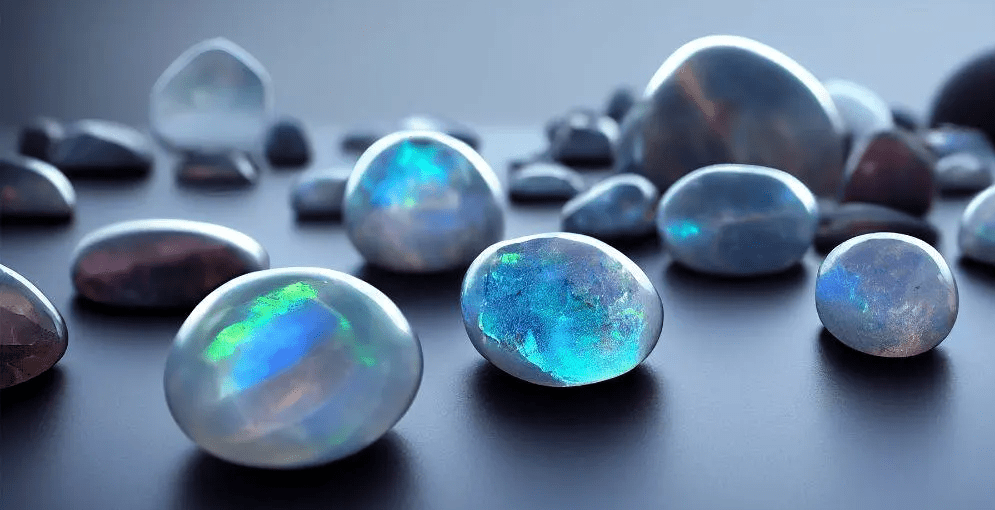
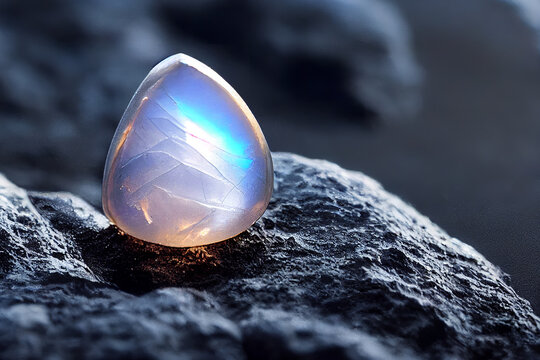
- Adularia: We’re already familiar with this mineral; let’s delve deeper. This mineral forms from the melts of the Earth’s crust due to active volcanic activity. The characteristic effect of adularescence is maximized due to its nearly perfect internal structure. Adularia has no microcracks inside, its substance plates are firmly fused together, making its iridescence particularly bright and noticeable. Interestingly, you won’t find this stone with ‘happy’ rainbow iridescence, nor should you expect multicolored flashes. Blue is the only color adularia will bestow, and when faceted into a cabochon, it can display incredible cat’s eye-like sheens. Adularia is the “most jeweler’s” (having the highest jewelry value) and most expensive moonstone. The finest specimens are found in Sri Lanka and India, and their cost can reach $70-80 per carat (very expensive for moonstone!). Additionally, observing this mineral reveals an optical effect of stunning three-dimensional depth. Our mothers and grandmothers were literally crazy about the white-blue adularias. However, after the dissolution of the Union, its popularity faded (due to many competitors), but today’s designers around the world have rediscovered adularia and are using it in their jewelry collections, typically setting it in silver, which perfectly complements the crystal.
- White Labradorite: Standing next to adularia in the ‘moonstone lineup’ is white labradorite. This stone with a charming name is much less valuable than adularia because it looks simpler. Its iridescence is weak; the mother-of-pearl shade is visible only on fractures. However, there are those among us who are crazy about such modest beauty: usually, white labradorite is faceted into a cabochon, in which case it becomes semi-transparent, and its iridescence resembles the pattern of gasoline on water.
- Labradorite: Unlike the lighter palette of the previous varieties, labradorite is a dark, sometimes even black stone. It’s also called labrador (like white labradorite), but the shade is always specified. In its raw form, the dark color of the stone is not very attractive. But quality polishing works wonders: the incomparable blue sheen makes this little stone desirable for fashionistas. Black labradorite – also a stone with a history: a pendant, necklace, or bracelet with moonstone that shimmers in blue, green, and purple tones looks literally like a peacock’s tail. For this, the crystal got its nickname – the peacock stone. This semi-transparent stone attracts attention like a magnet and looks very impressive.
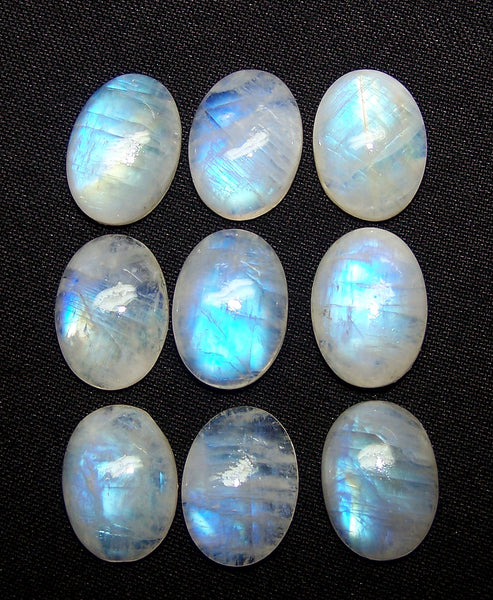
The Prophetic and Mystical Tales of Moonstone
Ancient Greeks believed the moonstone was a gift from Hyperborea, a land of divine and exceptional beings, endowing it with mystical power that enhanced intuition and predictive abilities.
The ancient Chaldeans of Mesopotamia reserved moonstones for priests who, during various rituals, would place a piece of this ‘moon fragment’ in their mouths to commune with the celestial body and access knowledge beyond the reach of ordinary people. Special incantations, coupled with the moonstone under the tongue, induced trances enabling them to foresee the future.
In medieval Europe, even during the dark ages, people desperately sought love. The moonstone, then considered a talisman for lovers or those seeking their soulmates, was believed to aid in finding the right partner and ensure success in romantic endeavors. It also granted lovers the ability to glimpse their future together. Lonely medieval ancestors often wore moonstone cameos near their hearts, feeling it not only facilitated romantic encounters but also importantly awakened love within themselves.
The moonstone also had associations with witchcraft. For instance, it was believed that a witch, upon seeing a white spot suddenly appear on the stone, could be confident that the Moon was “blessing” her mystical practices, as the stone received its magical power. Additionally, it was said that a yellow moonstone could trick death, encapsulating it within the stone. While this can’t be empirically verified, those knowledgeable in the arcane are convinced: if during a full moon you look at a yellow moonstone and it lights up with a blood-red hue, it’s a direct sign of the witchcraft magic contained within the mineral.
The most simple yet popular belief held that the moonstone was crystallized moonbeams, petrified and reaching the Earth’s surface. Essentially, for our ancestors, these stones were tangible proof of the connection between the celestial and terrestrial realms, serving as true “messengers” from the heavens to the sinful Earth.
Celestial Remedies: The Healing Powers of Moonstone
The primary “official duty” of the moonstone is its impact on the nervous system, from various aspects. For instance, it was believed that an amulet made of adularia has a calming effect on its wearer, bringing harmony, peace, and inner quiet. This belief is rooted in the idea that the Moon, particularly its effect on the human nervous system, can be intense. However, as a lunar emissary on Earth, the moonstone is thought to shield its bearer from these negative influences. It eases epileptic seizures, improves sleep, reduces aggression and nervous tension, and offers relief from the pains of unrequited love (including physical arousal), envious glares, and workplace troubles – essentially, from anything that can render a person unhappy.
Other organs and systems positively influenced by moonstone include:
- The heart
- The kidneys
- The liver
- Digestive system organs
- The brain
Moonstone is believed to alleviate epilepsy attacks, purify the blood, strengthen the immune system, and assist during childbirth. It’s also thought that the water element, to which the mineral is aligned, helps with swelling, stones, and solidifications, eases the pain of cancer patients, and flushes out toxins from the body.
An interesting tip for those looking to lose weight: although simply possessing the stone isn’t enough, bioenergetics suggest waiting for the full moon. During three consecutive nights, one should admire oneself in a full-length mirror while holding a moonstone, visualizing their new, desirable shape. Here’s the twist: the mirror should be full-length, and the person should be completely unclothed.
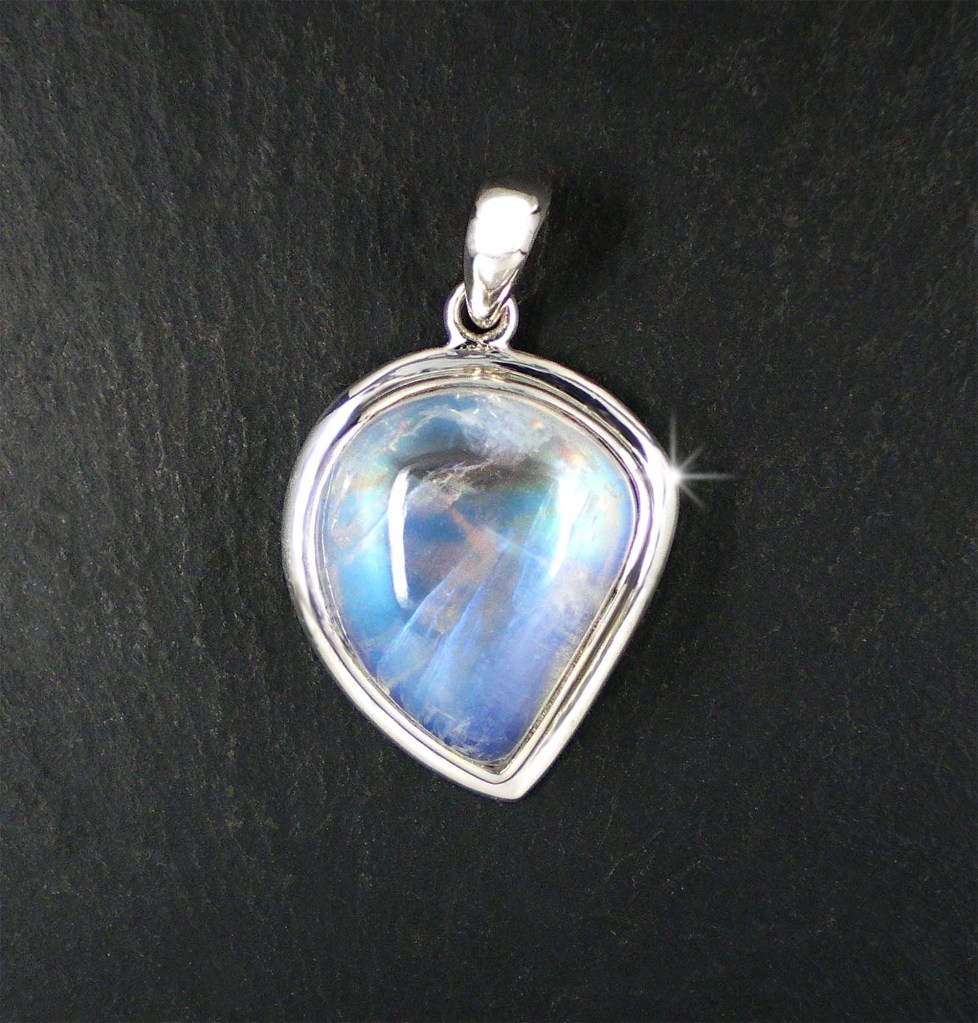
The Talismanic Power of the Moonstone for Those Born Under the Full Moon
The moonstone is a talisman of love, known for calming intense emotional and mental states. It endows its owner with the ability to articulate thoughts beautifully and precisely, bestows the gift of poetry, romantic artistic creativity, and insight into nature’s mysteries and the human heart. For lovers, adularia brings harmony, fidelity, mutual understanding, sometimes without even needing words, and distinctly reacts to cooling emotions by changing its color and luster, possibly becoming dull.
The stone’s luminosity increases during the full moon. It is a strong protector for people with explosive temperaments, preventing them from dissipating their energy and calming unproductive outbursts. Adularia effectively shields against harmful influences from people and unpleasant entities, purifies the space for its owner, especially if the owner frequently communicates with the stone. For coarse natures, adularia is almost ineffective, as it does not confront such traits but aims to develop only those who seek growth through their own will. This moonstone makes a person attractive, charming, and refined, bestowing upon the owner a unique charm and the ability to maintain composure even in very unpleasant situations.
During the new moon, it glows with a special chilling radiance, concentrating all its authoritative magical power. Its cold, gradually intensifying glow inspires dreaminess, imparts softness and tenderness, reduces internal tension, eliminates anger and excessive self-assurance, and heals from painful fantasies. It is particularly suitable for people born under the full moon, as well as on Mondays (a day governed by the Moon). It aids in matters of love and should be worn in a silver setting. The stone helps its owner find the right solutions. If uncertain, one should hold the moonstone, wait for the Moon to rise, and when its rays illuminate the stone, think intensely about the desired action, and the stone will “suggest” a solution. It endows its owner with the gift of eloquence and persuasion.
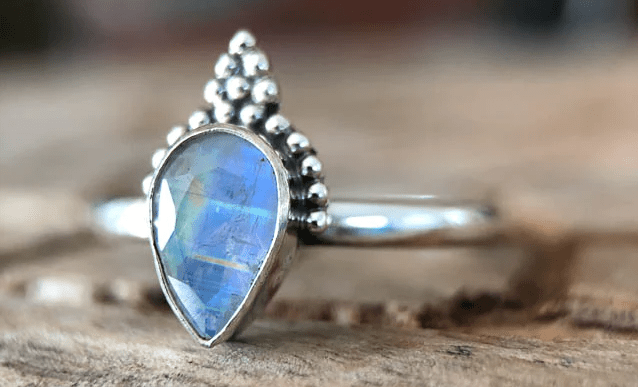
The stone’s qualities are most potent on Mondays. It is best worn around the neck or chest, or in a ring on the ring finger, and set in silver.
Cautionary Moonlight: The Careful Wearing of the Moonstone
One of the primary cautions for moonstone enthusiasts is this: it should not be worn constantly! The power of the moonstone directly corresponds to the Moon’s phases.
Waxing Moon: The stone gains strength, making its influence particularly gentle and effective.
Full Moon: This is the best time to wear the stone as it unleashes its full might. Seek its protection, converse with it, and formulate your desires – the Moon’s power will surely assist.
Waning Moon: During this phase, wearing the stone is strictly prohibited. The reason is that the Moon seemingly ‘extracts’ lunar light from the stone, acting like a ‘vampire’ draining your energy. Headaches, exacerbation of chronic illnesses, weakened immunity, depression – these are just some of the issues you might face if you forget to remove your moonstone jewelry during this time.
New Moon: Wearing the stone is also not recommended: with the Moon not yet visible in the sky, the stone becomes a mere ’empty and vain pretty trinket.’
The mineral itself possesses potent and sometimes unstructured energy. For the weak, the moonstone can be overwhelming, literally dissolving them in melancholy and inexplicable impulses, pulling in different directions as if caught between a swan, a crab, and a pike. Thus, it’s inadvisable to wear it during life’s challenging moments as it could worsen things. However, for the strong, it becomes an excellent energetic ally.
Harmony in Jewelry: The Ideal Metal Companions for Moonstone
When discussing the ideal metal pairings for the Moonstone, silver stands unrivaled. In terms of energy and visual appeal, this gem does not harmonize with gold. The delicate charm of the moonstone lies in its subtlety, modesty, and gentle beauty. Gold, by contrast, would be too bright and capricious alongside it, creating a disharmonious look and overshadowing the unpretentious allure of adularia. Silver, in this regard, is a perfect match: its white-gray steel shade naturally complements the blue or rainbow iridescence of the moonstone. You can choose from the usual subdued steel luster of the metal, blackened silver, or even play with a matte or hammered effect in the metal setting. While there are jewelry pieces set in nickel silver or costume metal alloys, their appeal may not last in their original form for long. Therefore, if possible, it’s advisable to opt for a piece set in genuine silver metal.
Regarding combinations with other gemstones, the moonstone is rarely paired with others. Typically, it is presented solo, as a more or less substantial stone in an oval or round shape. This is due to its unique beauty, which might go unnoticed in ‘competition’ with more vibrant crystals. However, there are ways to harmoniously combine different stones. Nowadays, you can encounter such exquisite mixes:
- Agate
- Turquoise
- Pearls
- Lapis lazuli
- Carnelian
These ‘dense’ matte stones highlight the understated charm of the moonstone, without distracting from its iridescence, creating an elegant and sophisticated look.
Gentle Guardianship: Care Instructions for Moonstone Jewelry
The delicate and tender nature of the moonstone necessitates meticulous care. Your primary responsibility is to protect the stone from scratches and, especially, from falls. By adhering to these and other simple rules (don’t worry, they aren’t too complex), you can extend the life of your cherished stone and enhance its beauty.
Let’s start with a list of prohibitions. Absolute don’ts include:
- Mechanical cleaning
- Ultrasonic cleaning
- Exposure to cosmetics and household chemicals
- Visits to saunas, tanning beds, swimming pools, and beaches
To clean the gemstone from dirt, it’s sufficient to occasionally wash it in warm soapy water, then rinse in cool water and pat dry with a soft cloth.
The fragile and delicate moonstone demands attentive care. Your first task is to protect it from scratches and, even more so, from falls. Following these and other simple rules (don’t worry, they aren’t complicated), you can extend the life of your beloved gemstone and amplify its beauty.
Let’s begin with a list of prohibitions. Absolute taboos include:
- Mechanical cleaning
- Ultrasonic cleaning
- Exposure to cosmetics and household chemicals
- Visiting saunas, solariums, pools, or beaches
For cleaning, just occasionally rinse it in warm soapy water, followed by cool water, and gently pat dry with a soft cloth.
Additionally, don’t forget about esoteric cleansing. Regardless of whether you view your moonstone jewelry as an amulet or not, it absorbs negativity and is highly influenced by lunar energy. Thus, an energetic cleansing ritual is essential from time to time to restore the stone’s abilities and allow it to continue serving you well. There are numerous methods for energetic cleansing; let’s mention the most popular:
- Place the stone in a glass of clean water, preferably spring or at least filtered water, for 3-5 days. Afterwards, carefully pat the stone dry and dispose of the water outside your home.
- Put the stone in a silver vessel. Silver has excellent cleansing properties and can absorb excess energy from the moonstone without harm. If a deep vessel is hard to find, a flat silver dish or plate, or at worst, a spoon (one you do not eat with) can be used.
- Bury the stone in the ground. This method is somewhat risky (it might get dug up and taken), but if you have a safe spot like a garden, it’s effective. Within a couple of days, the crystal will be cleansed of harmful energy.
Store the stone carefully and neatly, preferably in a separate box or a soft pouch. Ensure that jewelry with moonstone does not come into contact with other accessories. If the moonstone’s luster diminishes over time, don’t despair: a professional jeweler’s polishing or grinding can rejuvenate its appearance.
A moonstone, endowed with enchanting glow, is not just a beautiful and unusual accessory that draws attention. Its presence also seems to make you calmer, gentler, and softer, while endowing you with an extraordinary strength that others can sense physically. If you’ve been seeking inspiration, trust that a moonstone can provide it!


 tea party on the moon
Leave a comment