
What is a Lunar Eclipse, How it Happens and Looks
A lunar eclipse is a natural phenomenon studied by astronomers, often linked to various mystical events on Earth by esoteric thinkers. Physically, a lunar eclipse occurs when the Moon enters the Earth’s shadow. In astrology and esoteric beliefs, it represents a crisis impacting the realm of thoughts and feelings, signaling an area of life that requires completion and purification. This interpretation considers the zodiac sign in which the eclipse occurs.
According to the astrological portal Starwalk.Space, there are 2–4 lunar eclipses each year, each lasting several hours. These can be tracked using NASA’s calendar.
There are three types of lunar eclipses:
- Total Eclipse: The Moon completely enters Earth’s shadow. The Sun, Earth, and Moon align perfectly. This type of eclipse has seven stages.
- Partial Eclipse: The Moon partially enters Earth’s shadow.
- Penumbral Eclipse: The Moon is in the Earth’s penumbra. This type is the hardest to observe, as the Earth’s satellite becomes only slightly darker than usual.

According to the website Time and Date, which specializes in time and time zones, about 29% of all lunar eclipses are total. On average, a total lunar eclipse can be seen from any location every 2.5 years.
Features of Lunar Eclipses
A series of four consecutive total lunar eclipses without any intervening partial or penumbral eclipses is known as a lunar tetrad. These eclipses are colloquially referred to as a “Blood Moon”.
Lunar and solar eclipses always occur in pairs, typically about two weeks apart. What is the difference between a lunar and a solar eclipse? Lunar eclipses happen when the Moon crosses Earth’s shadow cone, while solar eclipses occur when the Moon is between the Earth and the Sun. In the first case, the Moon’s disk is darkened, and in the second, the Sun’s disk is obscured. In esoteric terms, a solar eclipse initiates a new cycle, while a lunar eclipse closes an old one.
Observing a lunar eclipse does not require special equipment, though more details are visible through binoculars. It can be seen from any point on Earth where the Moon is above the horizon. Sometimes during an eclipse, the Moon takes on a reddish hue due to Earth’s atmosphere better transmitting longer (red) wavelengths of light. Lunar eclipses can also appear yellow, orange, or brown. In esoteric terms, such an eclipse is considered more significant and powerful.
Impact of Lunar Eclipse on Nature and People
While the effects of a lunar eclipse on Earth and humans have not been scientifically proven, various religions and teachings pay special attention to it. What sensations are likely during this period, and how should one behave to more easily endure the lunar eclipse?
Influence on People in Hindu Astrology
In Hindu astrology, a lunar eclipse is known as Chandra Grahan. According to Vedic astrology Jyotish, it is considered an extremely inauspicious time for any worldly activities. Actions initiated during this period have a more potent and significant impact on people’s lives. What happens to people during a lunar eclipse? During this period, issues of relationships, conflicts, and legal disputes come to the forefront. Secrets that have been inaccessible to attention and understanding throughout the year are revealed. Any information spreads instantly, long-term projects are quickly initiated, and contracts are concluded. People may part ways or encounter new love. What is destroyed at this moment is unlikely to be restored. What begins becomes strong and lasting.
Impact of Lunar Eclipse on Nature
There are no scientifically proven facts about the physical impact of a lunar eclipse on Earth. However, esoteric practitioners track its influence on an energetic and spiritual level. According to Indian mystic Sadhguru, who interprets all events on Earth from a mystical perspective, during lunar eclipses, for a duration of 2–3 hours, all processes in the surrounding world accelerate on a subtle level.
What normally happens over a lunar cycle occurs in a moment in the cosmic dimension. On an energetic level, all plants on Earth go through their stages of growth, maturation, and decay more rapidly during a lunar eclipse. Therefore, food prepared during lunar eclipses is considered less energetically beneficial. Such food does not energize but rather decreases awareness, making a person lethargic and dull. One does not feel joy from eating and finds it easier and more beneficial to fast during the eclipse rather than enjoying tasty food. According to Sadhguru, the best approach during a lunar eclipse is a cleansing fast, either complete or partial.
How to Get Through a Lunar Eclipse
What should be avoided during a lunar eclipse? To more easily navigate the period of a lunar eclipse, consider excluding:
- Overeating and alcohol consumption. It’s better to abstain from eating during this time.
- Watching the lunar disk directly.
- Staying in open areas.
- Hustle, overexertion, excessive physical and mental labor.
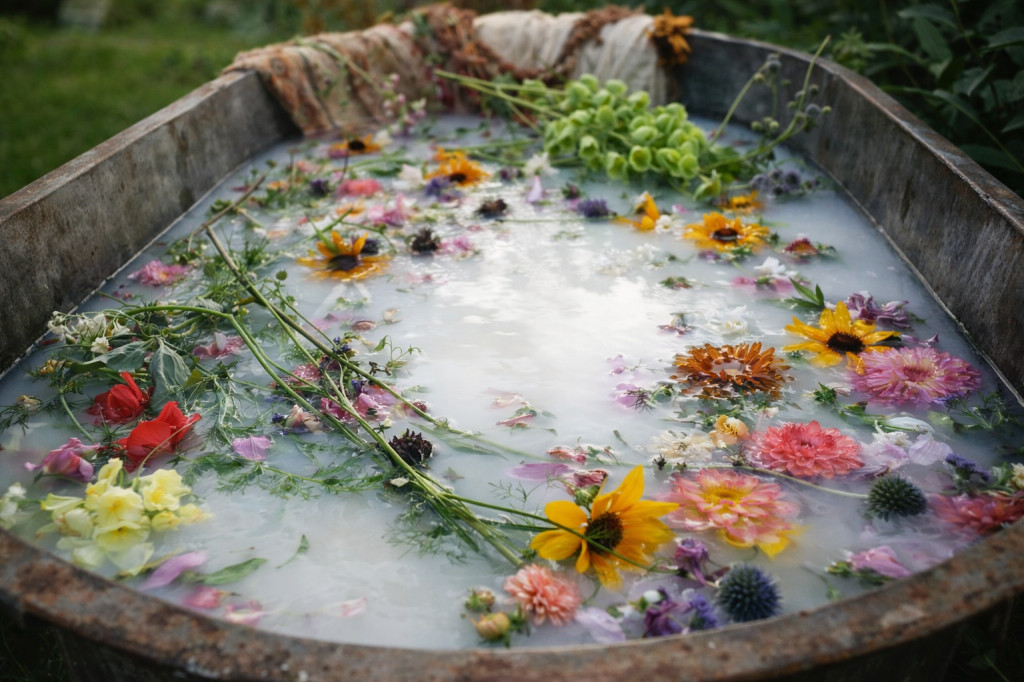
Before and immediately after the eclipse, take a full bath or shower. It’s recommended to slow down, devote more time to rest and meditation. Engaging in visualization sessions for desired blessings, performing energetic cleansing, participating in a Tarot session, or creating a natal chart can be beneficial. Any magical rituals performed during a lunar eclipse are believed to have greater power than on other days.
Astrologer Lauren Ash suggests keeping a journal of wishes and using sound healing. This can involve a session with singing bowls.
Shrouded in mystery and associated with numerous rules and rituals, a lunar eclipse is one of the most visually stunning astronomical events. If you believe in the power of the Moon, use this day to improve your life. Understand the essence of the phenomenon, experience it correctly, and transform your life.

Lunar Eclipses of 2024: Dates and Viewing Opportunities
In 2024, there will be several lunar eclipses, each presenting a unique celestial event. Here’s a list of the lunar eclipses scheduled for that year:
- March 25, 2024 – Penumbral Lunar Eclipse: This eclipse will be visible in much of Europe, North/East Asia, much of Australia, much of Africa, North America, South America, as well as the Pacific, Atlantic, Arctic, and Antarctica regions.
- September 17-18, 2024 – Partial Lunar Eclipse: This partial eclipse will be visible from Europe, much of Asia, Africa, North America, South America, along with areas of the Pacific, Atlantic, Indian Ocean, Arctic, and Antarctica.
These eclipses offer a fascinating opportunity for observers and enthusiasts to witness the dynamic interactions between the Earth, Moon, and Sun. Keep in mind that the visibility of each eclipse can vary depending on your location, so it’s a good idea to check local times and conditions for the best viewing experience.


 tea party on the moon
Leave a comment