
The exchange of energy between a man and a woman in relationships begins long before an official engagement, marriage, or even spending time together. It emerges from the very first glance they share, on an energetic level. It is on this same level that the relationship is built and developed further. For the relationship to be harmonious and to aid in the growth of the couple (both together and as individuals), it’s crucial to manage the energy—both masculine and feminine—correctly. Today, we’ll discuss how to achieve this.
A Closer Look at Energy
Energy is an intangible yet perceptible part of the human body, mind, and soul, felt not only by oneself but also by those around. Notice how different people can influence your feelings; some interactions leave you energized and ready to conquer mountains, while others can make you feel depleted. This variation indicates the presence of strong positive energy or low negative energy in the individuals you interact with.
While it’s impossible to visually track how energy flows through our bodies, proper energy flow and replenishment can significantly enhance motivation, provide the vitality to tackle both mundane and extraordinary tasks, increase overall activity making it seem like there are more hours in the day, and make achieving goals and attracting desires into your life much easier.
Conversely, with a low energy level, the outcomes are diametrically opposite.
Energy Exchange Between a Man and a Woman – What Is It?
Every individual possesses energy, either negative or positive. However, once someone finds their other half, their biofield merges with that of their loved one, resulting in their energies combining into a single structure, akin to communicating vessels.
By correctly giving and receiving energy, partners can:
- Build a strong union;
- Maintain love over a long period;
- Gain additional strength to achieve personal goals;
- Receive constant energetic nourishment for better well-being;
- Achieve harmony in all spheres of life.
Male and female energies are vastly different, yet both contribute to strengthening and developing each other.
It’s important to note that from an energy-information perspective, any couple that engages in an intimate relationship becomes a family. From this moment, partners merge their energy fields, creating a unified energy vessel. If you change partners, it’s necessary to sever the energetic connection with the previous one.
Men represent the energy of purpose and ideas, while women embody the energy of love and the power of achievement. Imagine a man existing alone in the world. He may have many ideas about conquering mountains and becoming a successful businessman, but each idea fails because his energy field lacks the energy of achievement. Now, imagine a woman (the keeper of strength) enters his life. She provides him with the energy of love and the power of achievement. With this necessary charge, he confidently pursues his goal, reaching it much faster.
Remember, the energy exchange between a man and a woman is like communicating vessels. The energetic potential of one partner depends on the other. For a woman to give energy and fill her partner with the power of achievement in a relationship, she must also receive energy from him, but on a different energetic level. We will discuss this further.
The Importance of Proper Energy Exchange Between a Man and a Woman
The deeper and stronger the energetic union between a man and a woman, the more powerful their combined strength and the brighter the results they achieve in life, both together and individually.
Look around you. Surely, there are couples who seem to have everything they desire almost magically fall into their laps. Their relationships are easy and inspiring. This is a direct indicator of a strong and correct energy exchange between partners, helping them:
- Strengthen their bond and maintain their romantic relationship;
- Resist negative external energies, keeping their internal energy field clean and powerful;
- Achieve their goals more quickly;
- Stay active and positive under any circumstances;
- Easily cope with life’s difficulties.
Then, there are couples who, despite living together, appear divided. They lack a sense of partnership, do not support each other, and do not develop common interests. In such relationships, often:
- Any achievements (promotions, changes in physique, radical life changes) come with pain, suffering, and difficulty;
- The woman does not feel true feminine happiness, and the man cannot achieve his desired goals;
- Partners may develop illnesses that hinder procreation.
The outcome is almost always the same – divorce and/or infidelity. It’s impossible to find harmony in a couple where energy circulates improperly. There isn’t the force that would charge both individuals and help them grow together.
Where Does the Energy Go?
How is it that partners can live together for a long time without forming a strong energetic bond? There are several reasons for this:
- Lack of separation. The woman gives, the man receives. If partners have not separated from their past relationships, their energy field will be directed towards the past.
- Daily energy leakage. Communication acts as a magnet for energy. The more partners interact with others outside the relationship (colleagues, friends, acquaintances), the less energy they have left for their internal family energy exchange.
- Energy being diverted elsewhere. Naturally, in the case of infidelity, a partner will give their energy to the person they are cheating with. However, such “leakage” can occur not only through physical contact. Energy can also drain through fantasies, for example, if a wife dreams about a more ideal partner.
The energetic strength of a couple only develops when both partners energetically invest in each other and understand how to properly manage their energy field.
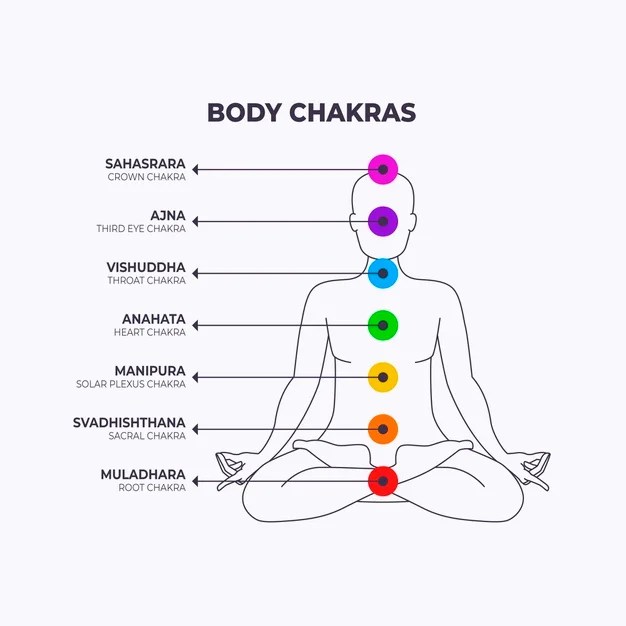
Harmonious Energy Exchange Between a Man and a Woman – The Chakra Theory
The key rules for establishing a healthy energy exchange in relationships between men and women are based on the concept of the seven chakras.
Interestingly, a chakra is an energy center within a person that governs emotions, physical well-being, and spiritual harmony.
The activity levels of the chakras differ between men and women. Each partner’s energy center has its own purpose. Among these, three chakras are predominantly active in women, and three are active in men. The seventh chakra, also known as the crown center, is active in everyone.
Muladhara
Location: The perineum area Active in: Men
Muladhara is the first chakra, marking the beginning of the energy exchange in relationships. Located in the perineum area, it is responsible for survival and the continuation of the species. The energy in Muladhara is generated by the man, while the woman receives this energy.
Energy transmission typically occurs during intimate closeness. Therefore, if a couple has issues with their sexual life, the man might experience an excess of energy in the first chakra, leading to:
- Restlessness;
- Excessive irritability;
- Potency problems.
When a woman does not receive enough Muladhara energy, she begins to act more masculinely. Such women are often recognized by the phrase “I can do it myself.” A lack of energy in the first chakra leads to the burnout of the feminine essence. The woman becomes more like a man, which completely eliminates the possibility of her achieving true feminine happiness.
Svadhisthana
Location: The abdomen area, below the navel
Active in: Women
Svadhisthana is responsible for pleasure and enjoyment. Proper flow of energy in this chakra allows a person to:
- Live in comfort;
- Enjoy the little things;
- Derive pleasure from life, sex, and work.
The transfer of Svadhisthana energy from a woman to a man occurs through the expression of care, tenderness, and love towards her partner. Failing to do so can lead to problems with a woman’s reproductive health.
Interestingly, if a woman does not have a partner, it is recommended to raise the energy of Svadhisthana upwards to enhance the third chakra.
For men, a lack of energy at the level of the second chakra manifests more trivially – he starts seeking “nourishment” elsewhere. As a result, this can lead to infidelity and further “draining” of his own energy into another’s life.
Manipura
Location: The solar plexus area
Active in: Men
Manipura, the third chakra, is responsible for:
- Willpower;
- Self-realization;
- Material prosperity.
Receiving sufficient energy from a woman through the Svadhisthana chakra activates the Manipura chakra in men. This activation empowers him to reach new heights in his career/business, increase his income, and strengthen his social status. As a form of reciprocation, the man returns to the woman the wealth she helped him achieve. In other words, through the Manipura center, a partner gives back energy to his beloved in the form of expensive gifts, financial support, and material benefits. Failing to do so can result in the man receiving a cold, almost indifferent attitude from his loved one. The consequence of “greed” is losing the woman. She may leave for someone who values her energetic support and rewards her with material goods.
Anahata
Location: The heart area
Active in: Women
Anahata, the heart chakra, plays a critical role in a person’s well-being. Its proper functioning affects a person’s social standing and self-esteem, and at its most influential, life force, feelings, and emotions.
At the Anahata level, it is the woman who gives energy, not only to her man but to the world at large, acting as a goddess (for her family, child, sister, husband). The transmission of female Anahata energy occurs through:
- Moral support;
- Soulful closeness;
- Understanding;
- Compassionate attitude.
A woman teaches the world around her (including her loved one) about compassion, care, and love. By doing this, she receives even greater energy in return and various gifts from fate. Specifically, in the relationship with her husband, the transmission of energy from the woman at the level of the fourth chakra will free him from the tyranny of instincts. The man will learn to love and will completely dispel thoughts of infidelity from his mind.
Interestingly, Anahata energy is transmitted through love. Women who do not love their husband but wish to maintain the union are advised to treat their partner as a brother or friend, expressing corresponding love.
If a woman does not give heart energy, she is likely to encounter heart or lung diseases eventually. Additionally, excessive capriciousness and self-discontent may manifest.
Vishuddha
Location: The throat area
Active in: Men
Vishuddha, the fifth chakra, aids in self-expression and communication. Essentially, it is our voice through which we manifest ourselves in the world. If a man has received sufficient energy from a woman at the level of the fourth chakra, he will begin to feel confident, his creative abilities will start to unfold, and his connections will strengthen.
Interestingly, men have an Adam’s apple at the level of Vishuddha, which is another natural hint about who should be giving energy.
A man can give energy to a woman at the Vishuddha level through:
- Resolving household issues;
- Providing opportunities for self-realization;
- Improving the material world.
Receiving male Vishuddha energy, a woman gains the ability to uncover and develop her inner creative potential. She will no longer need to expend energy on building harmonious relationships and constant struggle. She will feel happier and begin to bring ease to the world.
Ajna
Location: The center of the forehead
Active in: Women
Ajna, the sixth chakra, belongs to the higher energy centers. It is responsible for intuition and clairvoyance. The manifestation of female energy here occurs in support and guidance. By developing all previous chakras with the help of a man, at the level of Ajna, a woman helps him make the right decisions. Thanks to her heightened intuition, insight, and understanding of life, she guides her beloved.
Important: If a man has not transferred the necessary energy to a woman at the level of the three previous male chakras, then the female Ajna will simply be blocked, manifesting as a lack of wisdom and intuition.
If a woman does not use her intuition to accompany a man in the material world, she will not be able to break through the “ceiling” into the spiritual realm and achieve the well-being that is unlocked by the highest chakra.
Sahasrara
Location: Above the head
Active in: Both men and women
Sahasrara is the only chakra that is active in individuals of both genders. It governs spirituality, enlightenment, and vital energy. Energy at the level of Sahasrara cannot be transferred; it can only be developed by working on all the previous chakras.
If both a man and a woman manage to harmonize the functioning of the six preceding chakras, the Sahasrara opens for both partners, attracting abundance and goodness in all aspects of their lives. In such a union, career and other forms of growth happen swiftly. Both partners successfully develop both within the relationship and as individual personalities. They possess the vital energy necessary to achieve all their goals.
Male (Solar) and Female (Lunar) Energy
Not only the ancient Indian philosophy, which introduced the concept of chakras, views the male and female energy exchange as a significant component of energetic sustenance. Many other teachings also believe that the energy of men and women can unite, thereby facilitating the achievement of desired harmony.
According to Vedic scriptures, male energy is solar, while female energy is lunar. The Sun symbolizes activity, courage, risk, aggression, and strength. This celestial body possesses energy that enables reaching great heights and becoming a leader. The Moon represents softness, tranquility, and tenderness. It has a cooling energy that fills the world with harmony, love, and peace.
An energetically harmonious family is described as:
- The Man – Sun: Takes responsibility for his loved one and children. Provides material well-being. Acts as the leader in the household.
- The Woman – Moon: Responsible for harmony and peace at home. Inspires her loved one to achieve goals.
According to Vedic culture, such a family develops at the right pace, both partners are happy, have the opportunity to realize themselves as individuals, and find harmony within their small world called “family.”
An example of energetically imbalanced relationships might be the following union:
- The Man – Moon: Provides domestic comfort, takes care of household tasks, greets his wife from work with “pies.”
- The Woman – Sun: Takes responsibility upon herself. Constantly strives for conquering new heights, lives in a male position.
At the onset of such relationships, both partners may be quite satisfied. However, even with absolute mutual understanding, sooner or later, the union of “man-Moon” and “woman-Sun” collapses. There are two reasons. First, she gets tired of “carrying” everything on her own. The body and psyche cannot withstand the solar energy actively used in life because, by nature, they were created for lunar energy. Secondly, at a completely random moment, the Sun may manifest in the man. Then, he feels the need for another companion by his side – one who will support him, guide him, and listen to him. Often, when such families disintegrate, the man finds a naive young “Moon,” and the woman finds an already successful and usually older “Sun”.
How to Maintain Balance Between the Sun and the Moon?
As harsh as it may sound, the issue of energetic balance in families is, in most cases, the woman’s fault. By taking on the role of the Sun, she leaves the man with no choice. The fact is that a woman is inherently much stronger than a man energetically. And when she starts acting under the influence of the Sun, she simply overshadows her partner.
For harmonizing energy within a couple, women could be advised to:
- Avoid engaging in activities that increase the level of solar energy: arguments, leadership, domination, rivalry, competition, urgency.
- Pay more attention to activities that increase the level of lunar energy: communication, cleanliness, trust, beauty, charity, assistance, etc.
- Move away from the position of a “strong warrior who fears no obstacles,” to become a “calm and unhurried river that easily navigates life’s obstacles without giving them undue importance.”



 tea party on the moon
Leave a comment