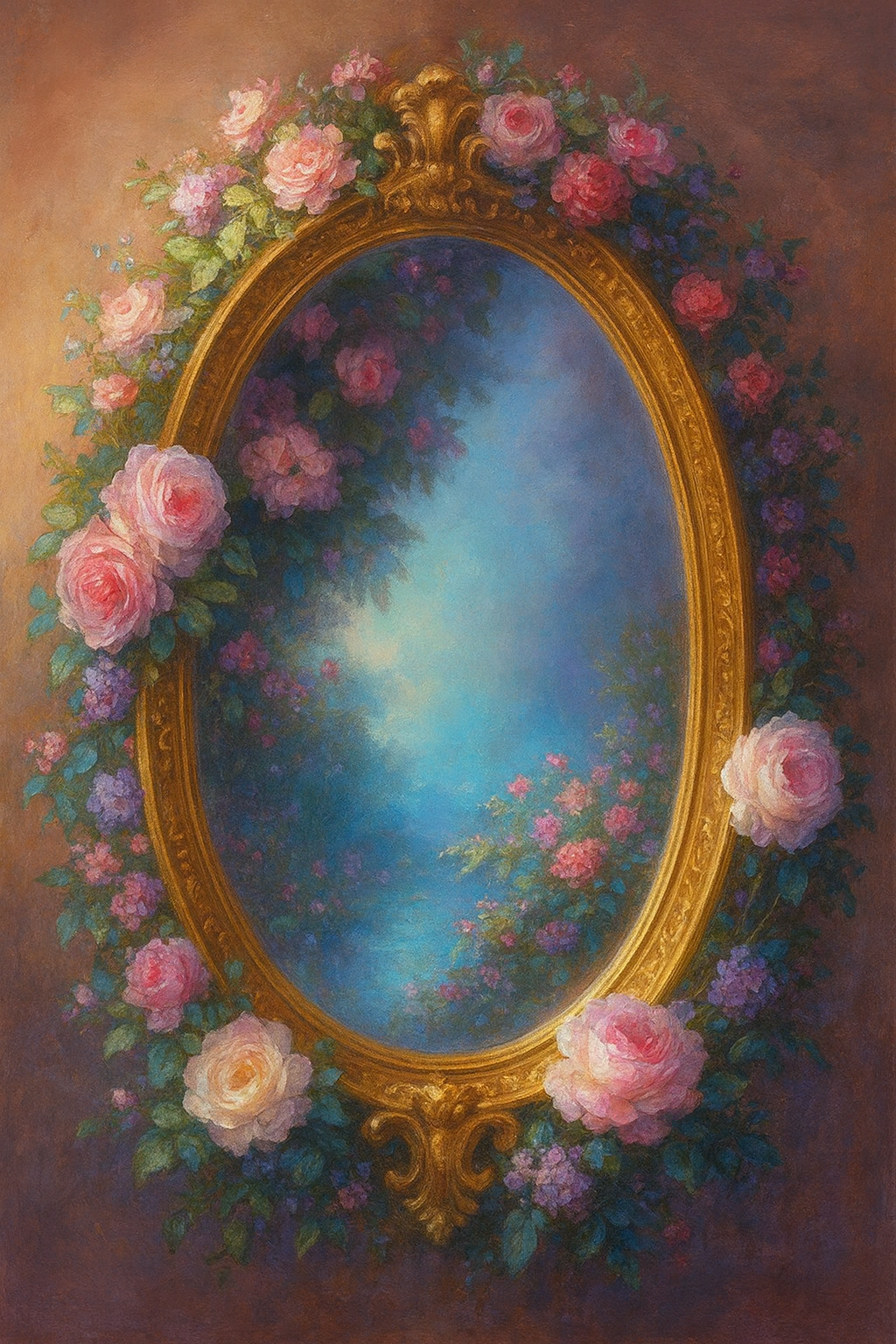
A Beginning with Reflection
Gratitude is often spoken of as if it were a fleeting mood, but it is far more enduring—a current running beneath the surface of life. It is present in the taste of fruit, the warmth of sunlight on skin, the rhythm of breath. When acknowledged, it grows. When ignored, it withers.
To weave gratitude into ritual is to give it roots and wings. And when that ritual involves a mirror, something extraordinary emerges. The mirror, long regarded as a symbol of truth and mystery, becomes a living witness of your appreciation. In its depths, your own reflection listens. Every “thank you” you whisper is doubled, mirrored back into your heart, amplified like an echo in a sacred cave.
Imagine the hush of a dim room, the soft glow of a candle, and your own eyes gazing steadily at you from within the glass. In that moment, you are both the giver and the receiver, the one who offers thanks and the one who absorbs it. The mirror holds space for both roles at once.

Mirrors Across Time
Stories of mirrors are as old as civilization.
- In ancient Egypt, mirrors were polished bronze and connected to Hathor, goddess of love, joy, and beauty. They weren’t tools of vanity, but sacred instruments believed to catch rays of the divine.
- In China, the “magic mirrors” of antiquity were said to reveal hidden images when struck by light, symbols of unseen truths brought into clarity. They were used as talismans of protection against harmful forces.
- In Greek mythology, Perseus used a reflective shield to confront Medusa, proving that mirrors (or reflective surfaces) could protect as much as they revealed.
- In European folklore, mirrors were shrouded after death, as souls could become trapped within their silver surface. Others believed they opened portals to spirit realms, which made them both revered and feared.
Across these stories, the mirror emerges not just as an object but as a threshold—a boundary between worlds, a vessel of memory, a tool of transformation. When gratitude is spoken into it, we activate this ancient power in a simple, modern act.
Preparing the Ritual
Every ritual begins with preparation. It is not the tools that matter most, but the reverence you bring.
- Selecting the Mirror. Any mirror will do, though one kept solely for spiritual use deepens the sense of devotion. Clean it until it gleams—not only with cloth and water, but energetically, through incense smoke, a ringing chime, or a sprinkle of saltwater.
- Setting the Scene. Candlelight softens the edges of reality. Crystals amplify the resonance—rose quartz for compassion, citrine for joy, obsidian for grounding, clear quartz for clarity. Flowers, especially white lilies or roses, are beautiful companions.
- Aligning Yourself. Before you stand before the mirror, close your eyes and breathe deeply. Place your palm on your heart. Let a few blessings rise into awareness: the sound of laughter, the resilience of your body, the wisdom gathered from challenges.
The stage is set, not with grandeur but with intention.
The Flow of Mirror Gratitude
Approaching the mirror feels different once it has been prepared. The glass is no longer a tool of habit, but a silent witness waiting to receive.
- Meeting Your Reflection. Look into your own eyes as if greeting an old friend. Stay there, even if it feels strange. The discomfort is simply the threshold into presence.
- Speaking Thanks. Allow your gratitude to take shape in words. Begin with the simple: “Thank you for this day. Thank you for the breath that sustains me.” Then expand: “Thank you for the love I give and receive. Thank you for the strength that carried me through trials.”
- Turning Inward. Many forget to include themselves in their gratitude. Speak gently: “Thank you for showing up. Thank you for enduring. Thank you for choosing growth, even when it was difficult.”
- Sealing the Blessing. Imagine your words filling the glass with light—golden, silver, or violet, depending on what feels natural. See that light return to you, flowing into your chest, wrapping around you like a protective cloak.
This ritual is not about performance. It is an exchange of energy, a circle where gratitude moves outward, then comes back with multiplied strength.
“Gratitude spoken into a mirror becomes more than words—it becomes a spell of blessing reflected back.”

Variations on the Ritual
The beauty of mirror gratitude is its adaptability. It can be as brief as a whispered thank you in the morning or as elaborate as a full moon ceremony.
- Morning Gratitude. A quick acknowledgment before the mirror sets the rhythm of the day.
- Evening Gratitude. Offering thanks before bed clears the mind, easing it into rest.
- Full Moon Reflection. Place your mirror where moonlight touches it. Speak your gratitude as lunar light floods the glass, amplifying your words with celestial energy.
- Seasonal Rituals. During solstices or equinoxes, use the mirror to thank the cycles of nature, aligning your personal rhythm with the earth’s.
- Collective Gratitude. Invite others to share a mirror. Each person speaks a single blessing. The shared reflection weaves a tapestry of appreciation, strengthening bonds.
Why This Ritual Transforms
Three layers are at work when you engage in mirror gratitude.
- Psychological. To speak blessings while gazing at yourself is to rewrite inner dialogue. Where self-criticism once lived, affirmation takes root. Over time, this strengthens resilience and fosters compassion toward yourself.
- Energetic. Mirrors are believed to magnify and return what they receive. When you offer gratitude, it bounces back, saturating your environment with its vibration.
- Spiritual. The act awakens self-recognition. You are not only acknowledging the world but also your role as co-creator of it. The ritual shifts you into alignment with the universal flow of abundance.
Symbolism and Depth
Colors, moon phases, and crystals add layers to the ritual.
- Colors: White candles invite clarity, pink symbolizes love, and violet deepens spiritual connection.
- Moon Phases: The waxing moon enhances growth; the full moon amplifies; the waning moon helps you give thanks for what is ready to be released.
- Crystals: Rose quartz softens the heart, citrine calls forth joy, amethyst heightens spiritual awareness, and obsidian grounds gratitude in reality.
These additions are not requirements, but enhancements—threads woven into the larger tapestry of your intention.
Try This Ritual Tonight
- Light one candle.
- Place a crystal or flower near your mirror.
- Look into your own eyes. Speak three blessings.
- Imagine your gratitude filling the glass, then returning to you in waves of light.
Write down how you feel afterward. Repeat tomorrow.
(One minute a day is enough to transform your relationship with yourself and your world.)

The ritual of mirror gratitude is deceptively simple. It does not ask for hours of devotion or complex ceremony. It asks only for presence—for the courage to meet your own gaze and the humility to say thank you.
Each time you perform it, the mirror becomes not just a surface but a companion. It remembers your blessings, carries your words, and reflects your sincerity. With every ritual, you deepen your relationship not only with yourself but with life itself.
Gratitude reflected is gratitude multiplied. And when multiplied, it reshapes the world you walk through, filling it with light, abundance, and peace.



 tea party on the moon
Leave a reply to The Meaning of 444 in Angel Numerology – tea party on the moon Cancel reply